


The value of willow
12/04/2026
Willows have always fascinated me.... pollared willows with character and with a bit of luck a little owl in the hollow trunk, fresh yellow and green catkins at the beginning of spring, the clever craft of basket weaving and also the unique living willow structures. Willows are versatile and that is what makes them just fascinating.
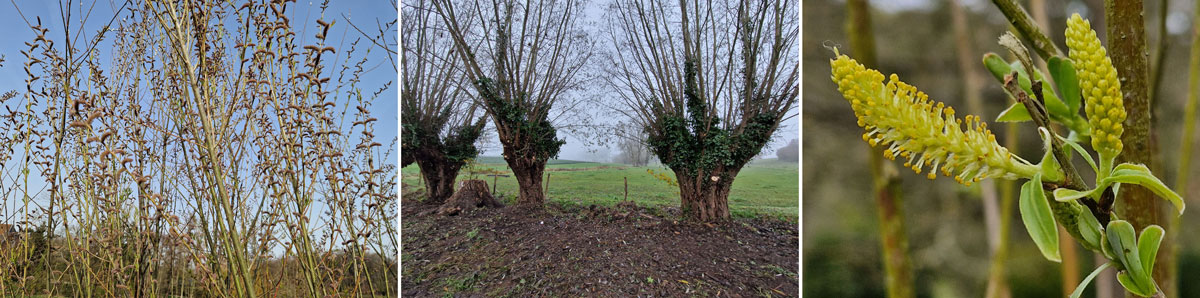
What many people do not know is that pollarded willow rows used to be created by knocking thick branches into the ground as grazing stakes. Those poles began to re-root and sprout and were pollarded every few years. This created the characteristic rows of pollarded willows that are so strongly associated with our landscape today. A fine example of how functional use and ecology used to naturally go hand in hand.
Research shows that the willow is number one in terms of natural value. More than 450 insect species depend on willow for food, which is even more than our native oaks. Willows are among the first bloomers in spring, making them an indispensable food source for early pollinators such as bees and bumblebees, which are looking for nectar and pollen after winter. They are a real key species for our biodiversity and therefore should not be missing in your garden. By planting a willow, you are not only shaping your garden, but supporting an entire ecosystem.
There are numerous species of willow each with their own character. The Salicaceae is a plant family with 300 species of willow, 10 of which are native. Each species has its own qualities: some excel in ecological value, others in uses. Together, they form a versatile palette for those who want to work with living materials. Here we list the most important native willows according to their function/value:
- Biodiversity value: pussy willow (Salix capraea) grey willow (Salix cinerea) and eared willow (Salix aurita)
- Willow: white willow (Salix alba), crack willow (Salix fragilis) with many varieties
- Wickerwork: basket willow (Salix viminalis), bitter willow (Salix purpurea), almond-leaved willow (Salix triandra), crack willow (Salix fragilis)
- Living structures: white willow (Salix alba), basket willow (Salix viminalis), crack willow (Salix fragilis), almond-leaved willow (Salix triandra)
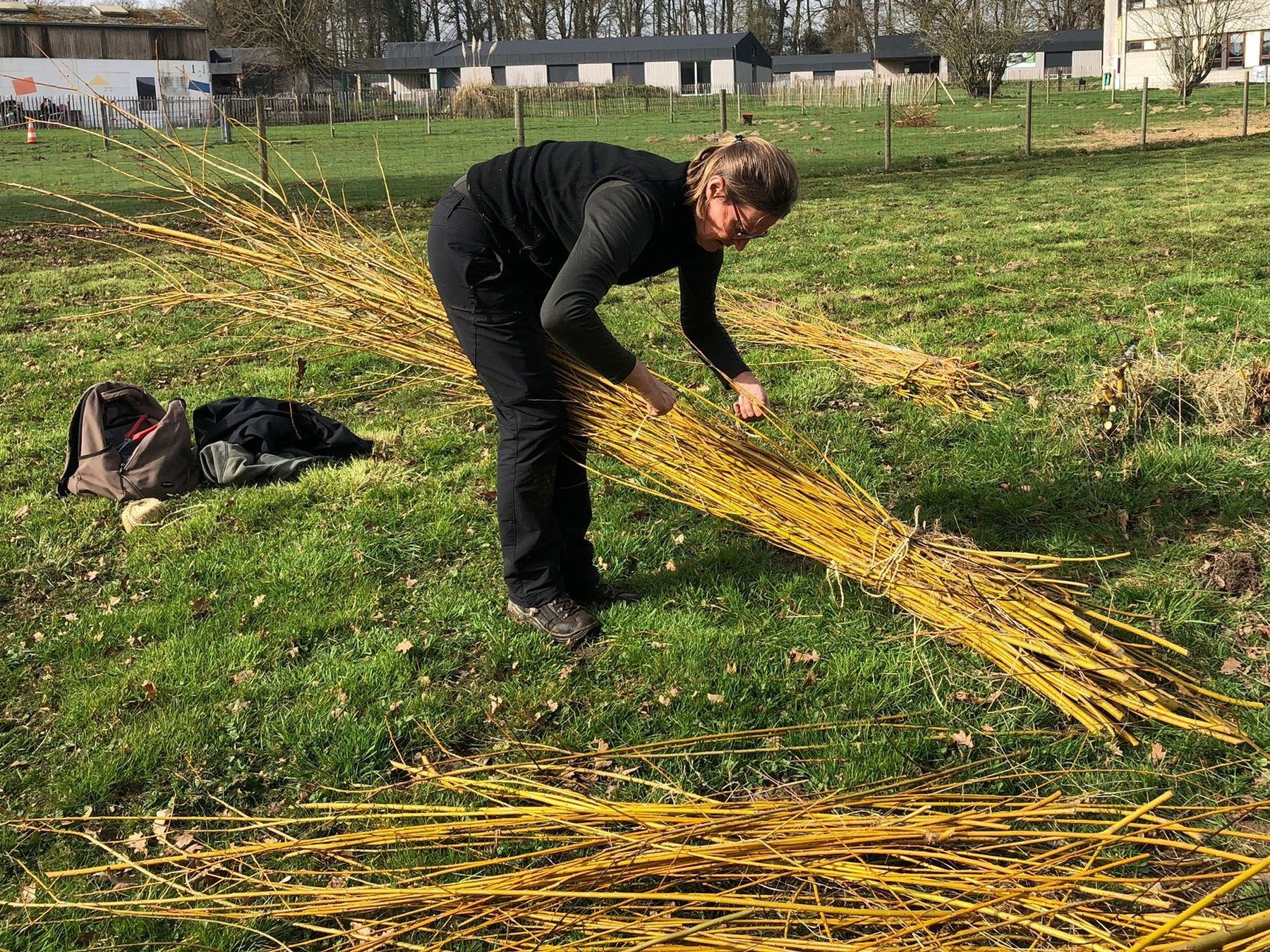
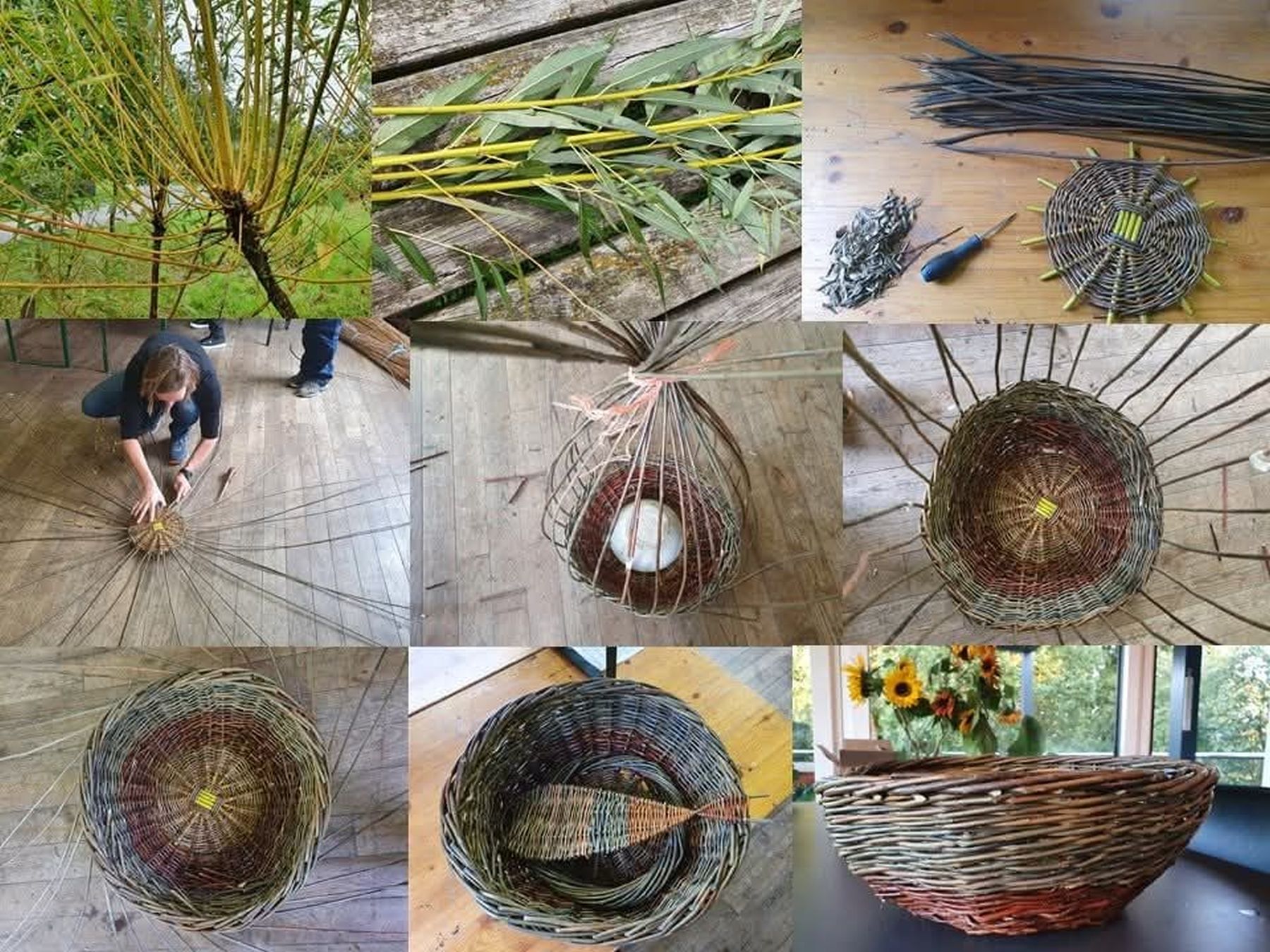
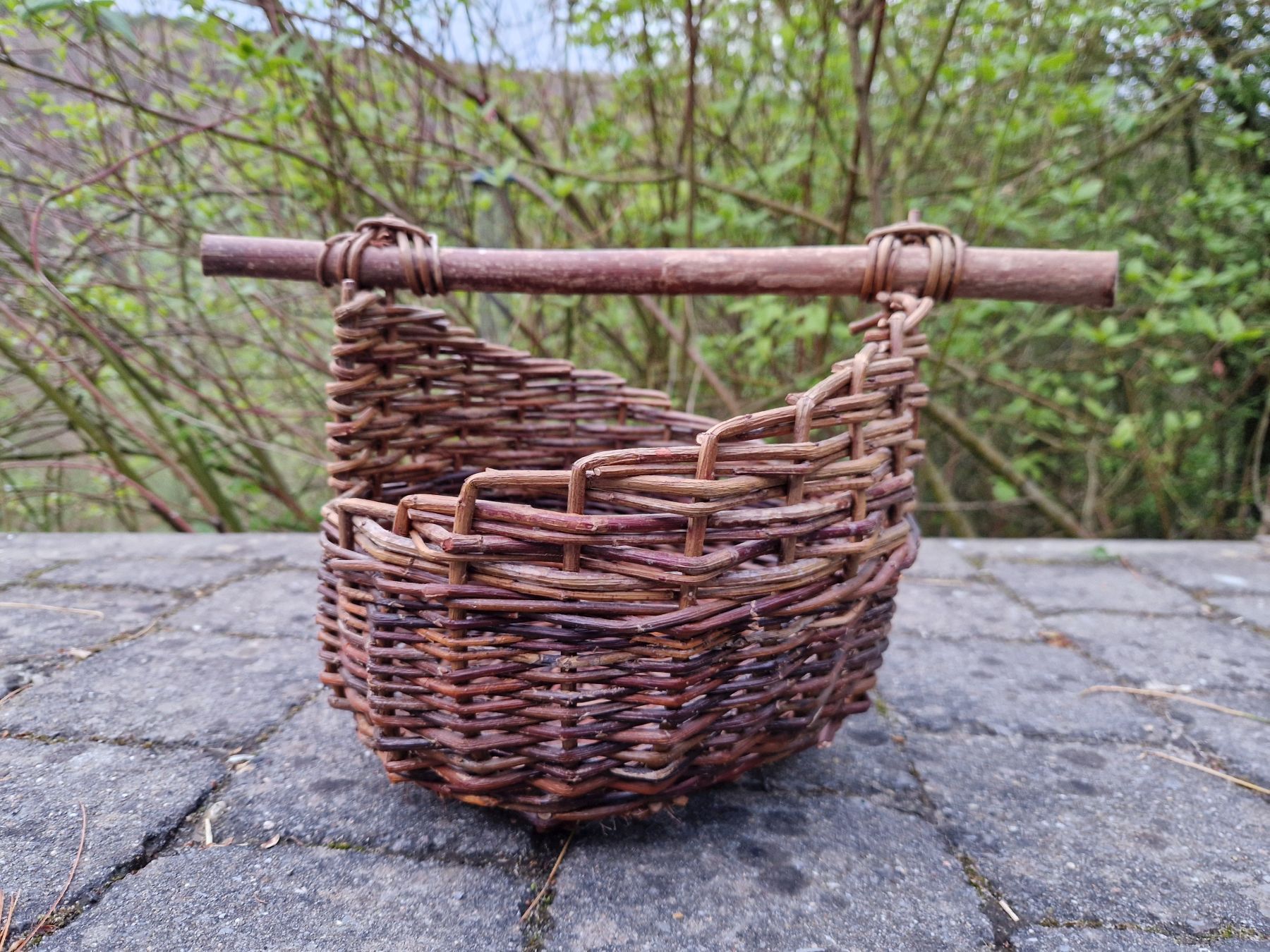
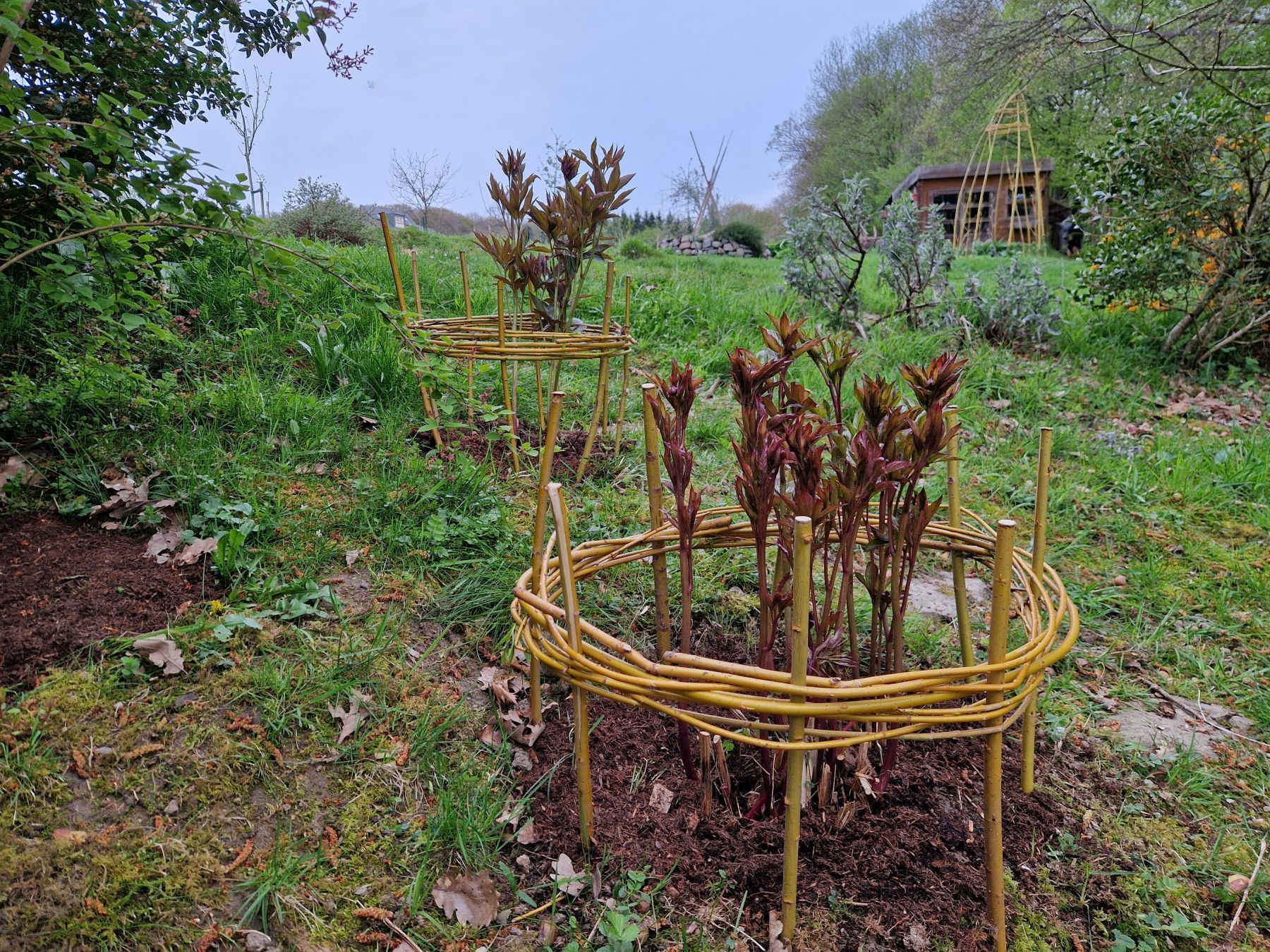
Willow is extremely suitable for wickerwork. Annual pruning of willow twigs produces an abundance of supple and strong material that is perfect for making baskets, border edges, plant supports or other small garden elements. Perfect for circular gardening: what you prune can be given a new function in the garden. I attended a few workshops and am very proud of my self-braided 'baskets'. Working with willow is a real craft and also soothing. You are, as it were, in touch with natural materials and with the rhythm of the seasons. Braiding can be done all year round, but you have to soak the willow twigs in water to keep them flexible.
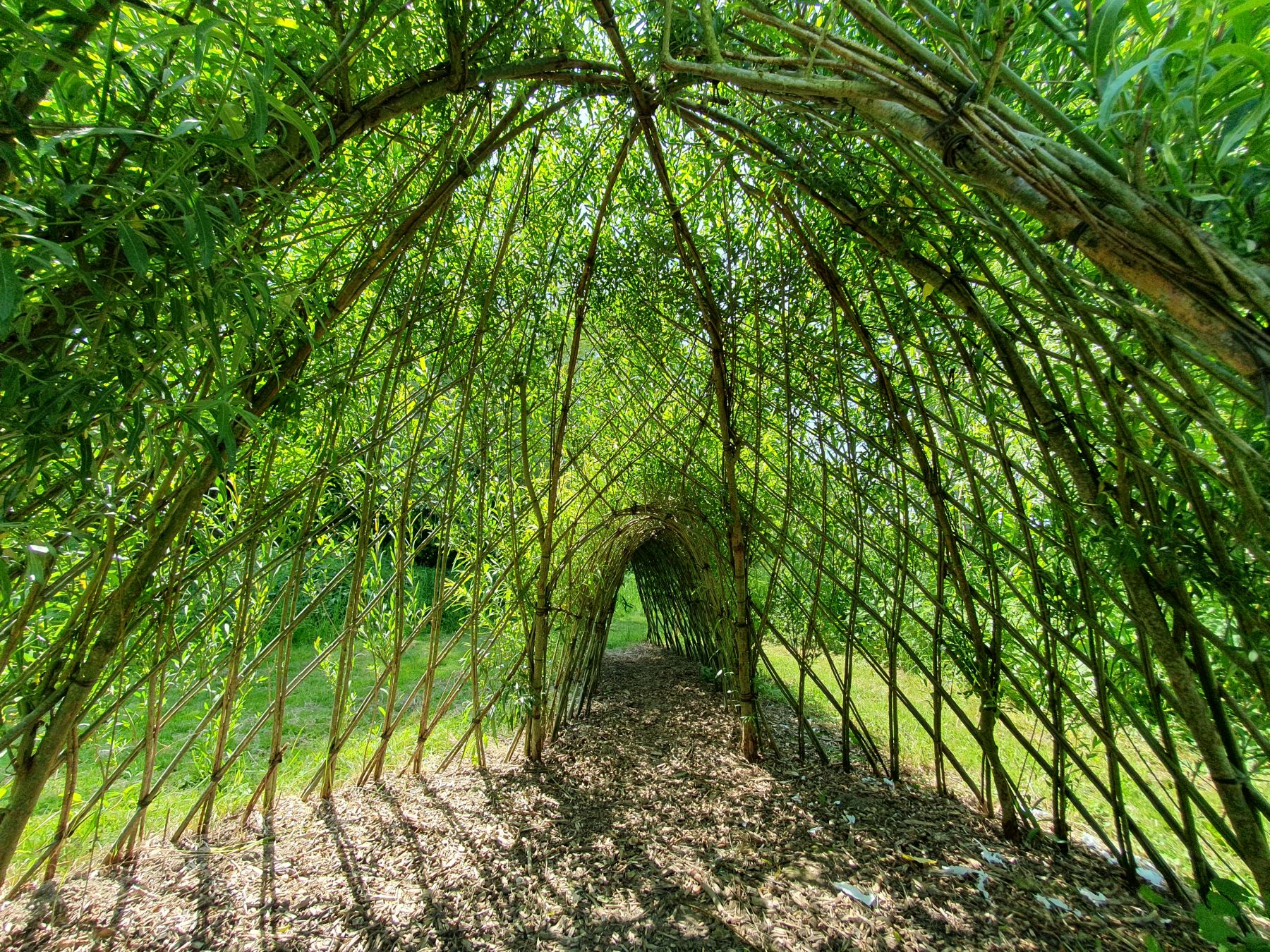
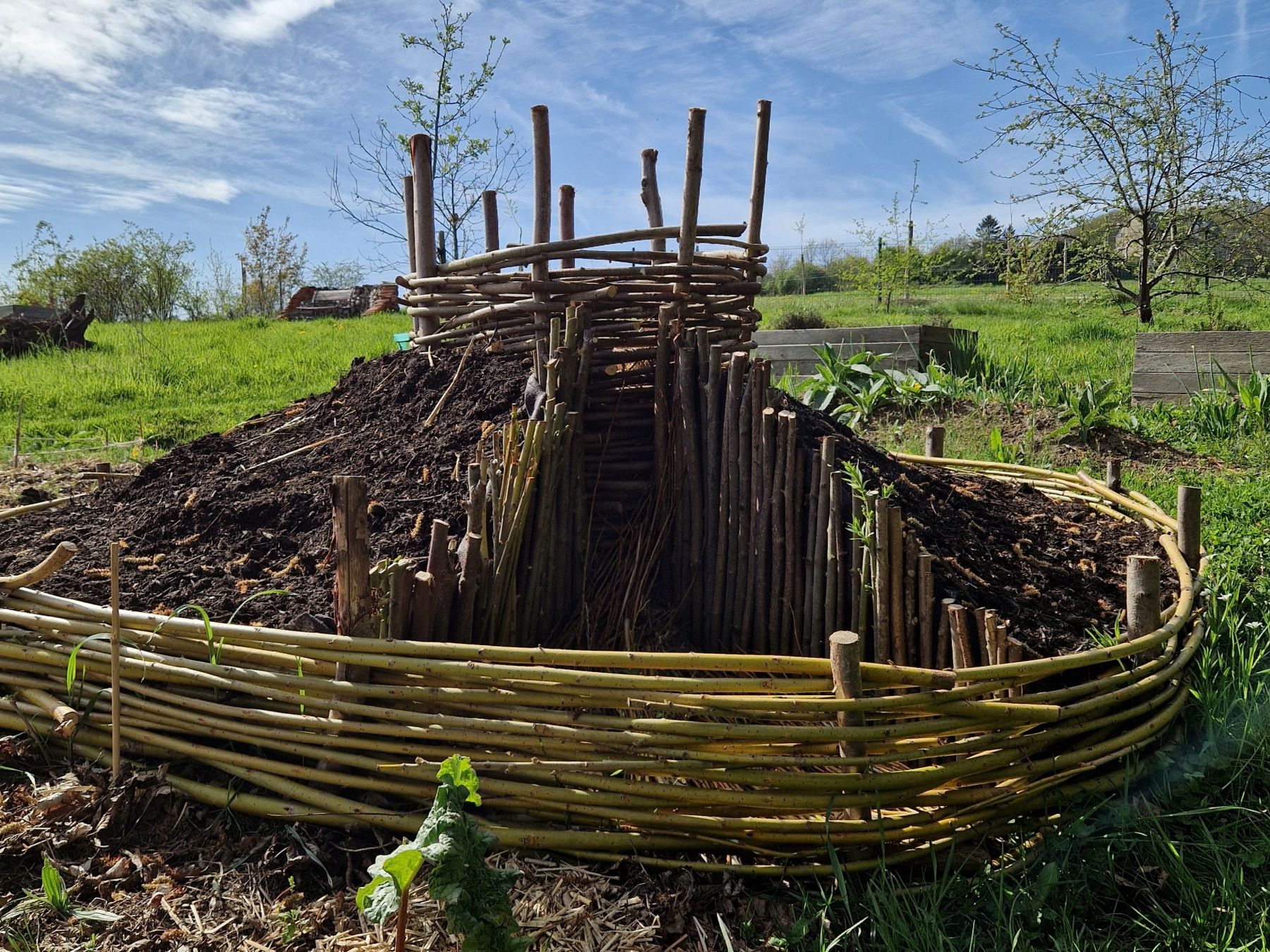
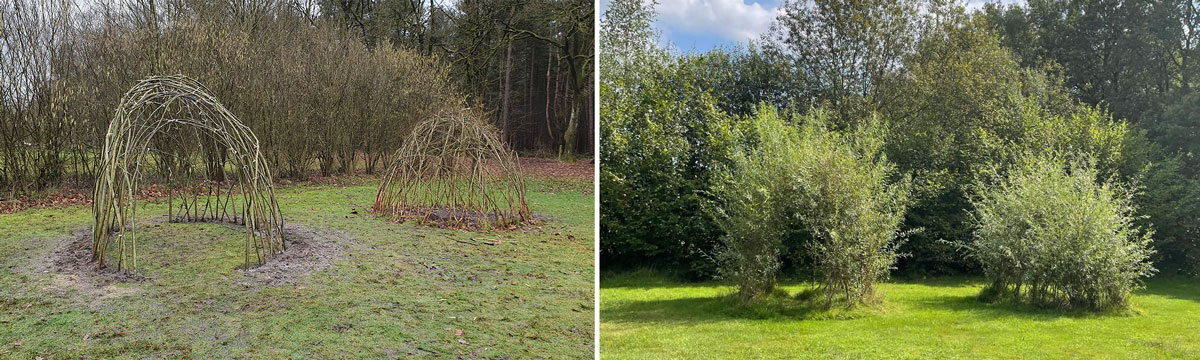
The unique thing about willows is their enormous growing power and flexibility. Their branches can be easily staked and root easily. It is precisely thanks to this characteristic that you can use them to create living structures in your garden. You have probably already come across a willow hut or a willow tunnel or a living willow criss/cross hedge is also a fun and playful way of adding a living structure to your garden. Living willow structures are made with fresh material between November and February, so they take root easily. This structure is never finished, as it lives, grows, moves, compacts, it is a dynamic process.
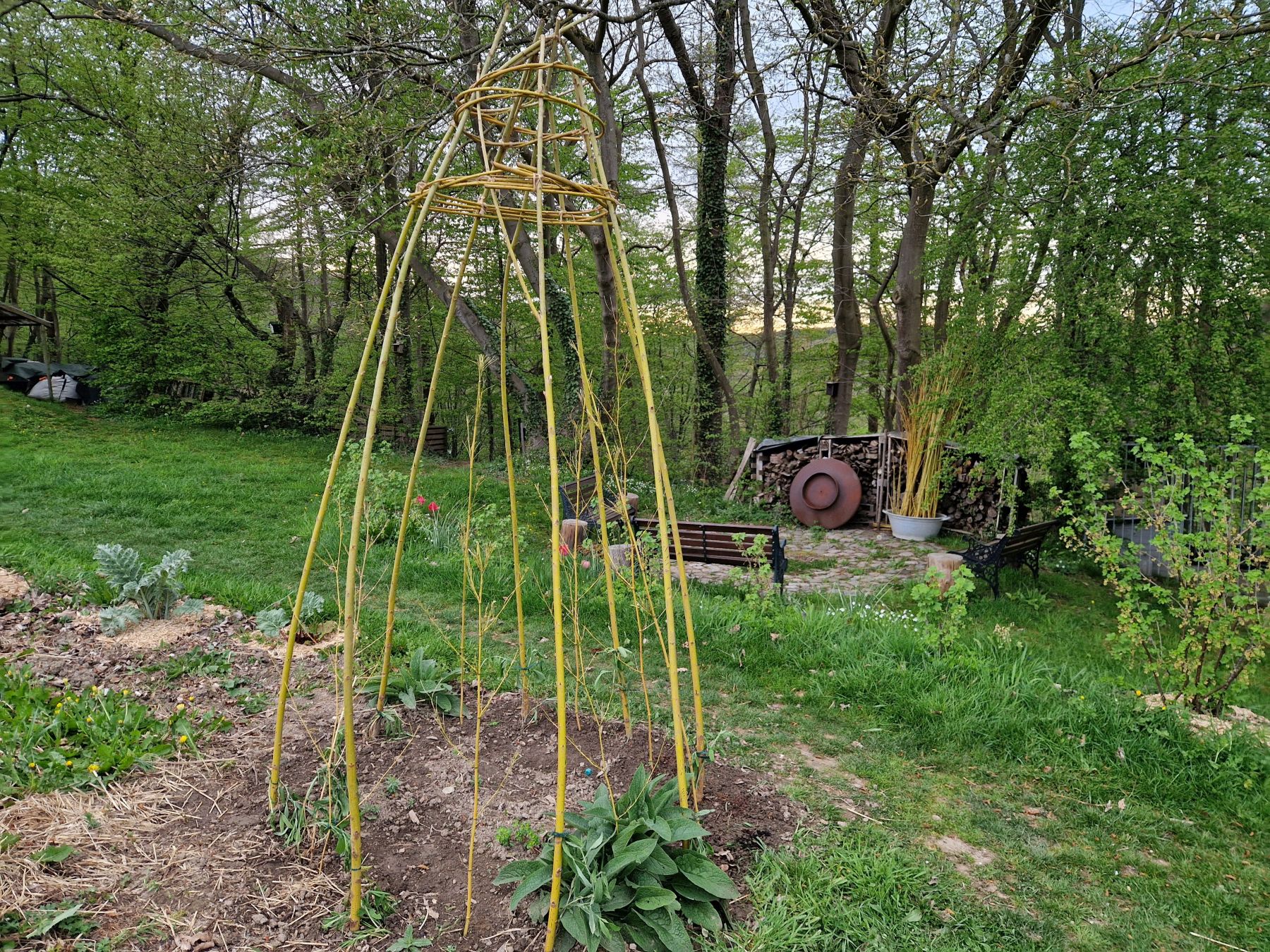
I just created a 'habitat tripod' of white willow, a kind of mini-habitat for biodiversity, with climbing sweet peas and around it wild teasel and other wildflowers. April is already a bit late so probably this willow will not take root anymore, but it works ideal as a support for climbing plants. With the leftovers, I made small bundles to create an insect corner. Gardening in a natural and circular way - slow, hands-on, and simple. You should definitely give it a try yourself!
Comments
No comments have been added yet. Be the first to add a comment. Add a comment